
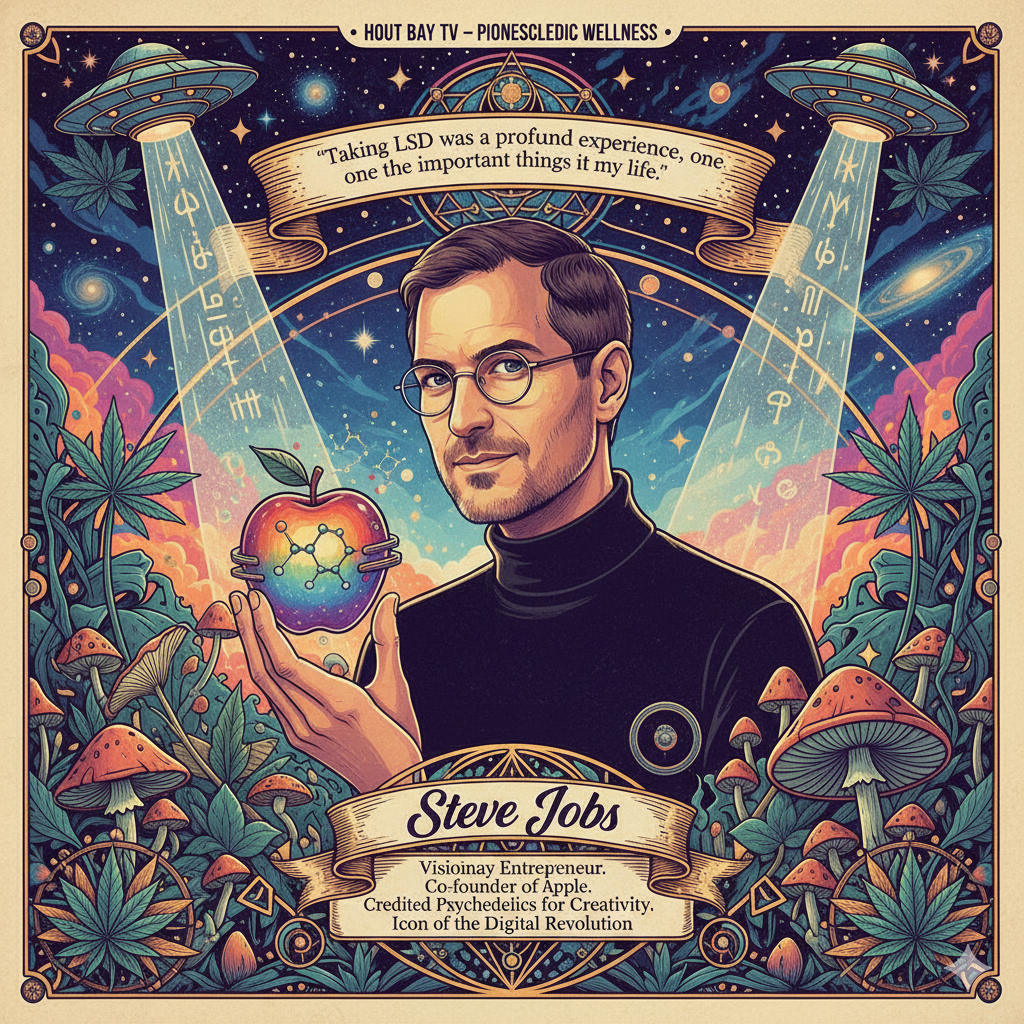
Steve Jobs credited his experimentation with psychedelics, particularly LSD, as a cornerstone of his "visionary" perspective, famously calling it one of the most important things he had ever done. He believed these experiences deconditioned his mind, revealing that the established rules of life and technology were arbitrary constructs that could be rewritten. This expanded awareness allowed him to step outside the status quo and perceive the "other side of the coin," fueling his ability to conceptualize products that consumers didn't yet know they wanted. For Jobs, technology was not merely a commercial endeavor but a contribution to the "stream of history," a belief rooted in the profound sense of interconnectedness he experienced during his psychedelic years.

To channel these broad visions into tangible products, Jobs relied on the discipline of Zen meditation. His practice emphasized the power of intuition over raw intellect and the aesthetic of shibumi—an understated, profound simplicity. This spiritual focus on "eliminating the unnecessary" became the DNA of Apple's design philosophy; he ruthlessly removed buttons, ports, and complex interfaces to reduce the cognitive load on the user. By treating the computer as a "bicycle for the mind," Jobs fused the expansive creativity of his psychedelic insights with the rigorous focus of Zen, creating technology designed to amplify human potential.