
“Psychedelics can show you possibilities. They don’t give you information about how to maintain the experiences, and if you try to rely on the drug for the experience the drug stops working after a time… But, in this case, just having seen that it was possible, I was motivated to keep working at it.”
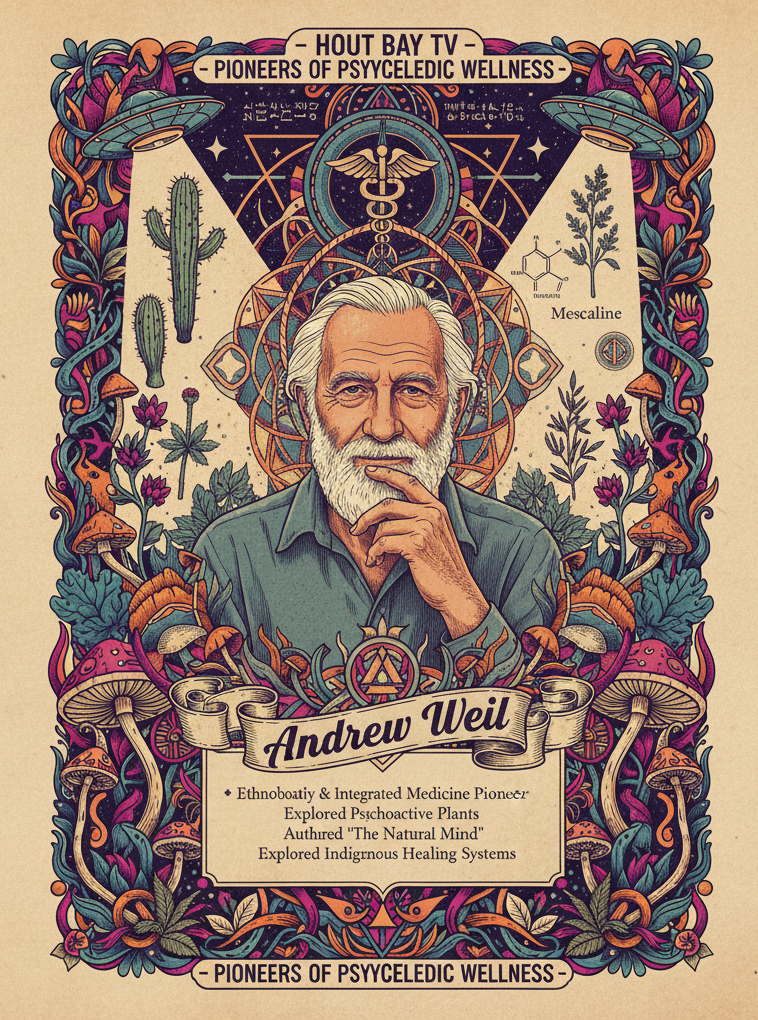
Andrew Weil (b. 1942) is a physician and pioneer of integrative medicine whose work legitimizes the psychedelic experience by framing it not as a deviance, but as a biological necessity. He is best known in this context for his 1972 book The Natural Mind.Weil argues that humans have an innate, biological drive to alter their consciousness, which is as fundamental as hunger or sex. He views psychedelics less as "medicines" that cure you and more as "active placebos"—substances that trick the mind into dropping its defenses so the body can heal itself.
Andrew Weil views psychedelics as powerful "active placebos" that do not cure patients directly but rather unlock the body's innate capacity for self-healing by temporarily dismantling the rigid habits of the conscious mind. He argues that true wellness stems from the mind-body connection, and psychedelics serve as "teaching tools" that demonstrate this link—showing a patient, for instance, that a chronic allergy or physical limitation can vanish simply through a shift in perception. For Weil, the ultimate goal of using these substances is not to become dependent on the "high," but to treat the experience as a glimpse of a destination; once the drug shows you that a state of wholeness and health is possible, the work of wellness becomes training yourself to return to that state of balance and integration without the chemical aid.
